D Latch
📌 Introduction
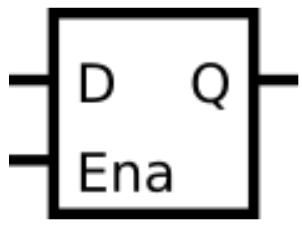
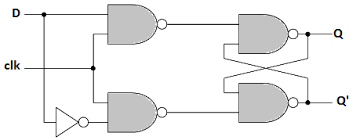
A D latch is a level-sensitive sequential element.
Unlike flip-flops, which are edge-triggered, latches respond to the level of the enable signal.
In Verilog, a D latch is described using a level-sensitive sensitivity list (always @(*)), and since it is a sequential element, non-blocking assignments (<=) should be used.
When the latch is enabled, it acts like a transparent buffer — the output follows the input.
When disabled, it holds (latches) its previous value.
🧑💻 Code Example
module top_module (
    input d,
    input ena,
    output q);

    always @ (*) begin
        if (ena)
            q<=d;
    end

endmodule